 French
  German
  Italy
Italy  Spain
Spain  Mexico
  Portugal
  Brazil
  Argentina
  Poland
  Rusia
Rusia  Austria
  Arabic
  Ecuador
  Canada
  Norway
  Benin
Benin  Sweden
  Croatia
  Japan
Japan  Korean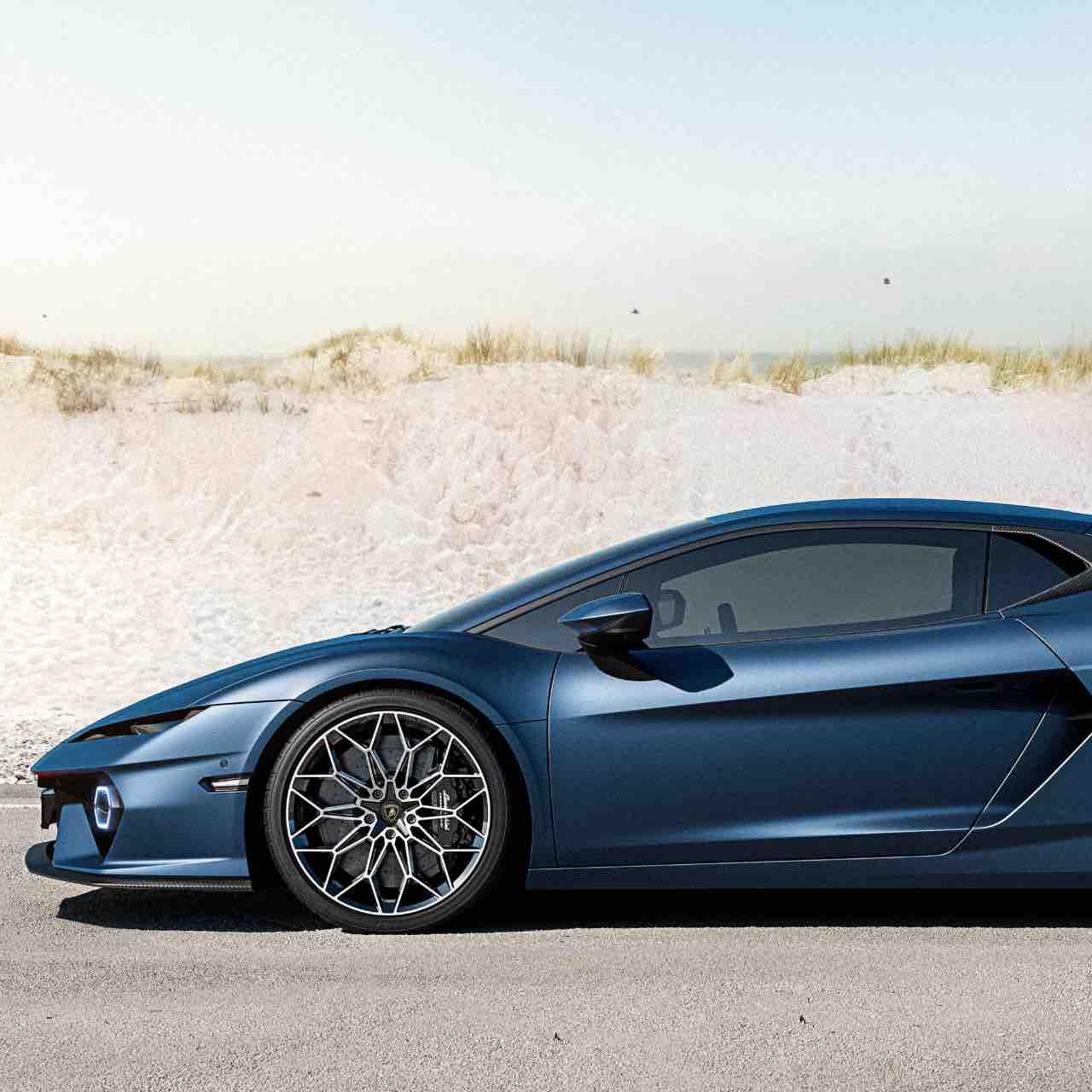
Experience four-star elegance and service

The Art of Reinvention: Lamborghini's Temerario and the Courage to Begin Again
The Art of Reinvention: Lamborghini's Temerario and the Courage to Begin Again
A daring transition: Lamborghini redefines its mid-engine legacy with the hybrid Temerario.
In retiring the naturally aspirated formula that defined a generation of Sant'Agata Bolognese motorcars, Lamborghini has not diminished its legacy. It has, with considerable intellectual daring, chosen to extend it.
There is a particular kind of courage that the greatest luxury houses share, not the courage to do more of what made them celebrated, but the courage to step away from it entirely, at the moment of its fullest expression, in pursuit of something more considered. Hermès relinquished the status of the It-bag at its commercial peak. Rolls-Royce electrified its drivetrain when the V12 was still beyond reproach. Now, Lamborghini has quietly closed the chapter on the naturally aspirated engine in its mid-engine sports car - the howling, high-revving heart of the Huracán and every Gallardo before it and opened an entirely new one.
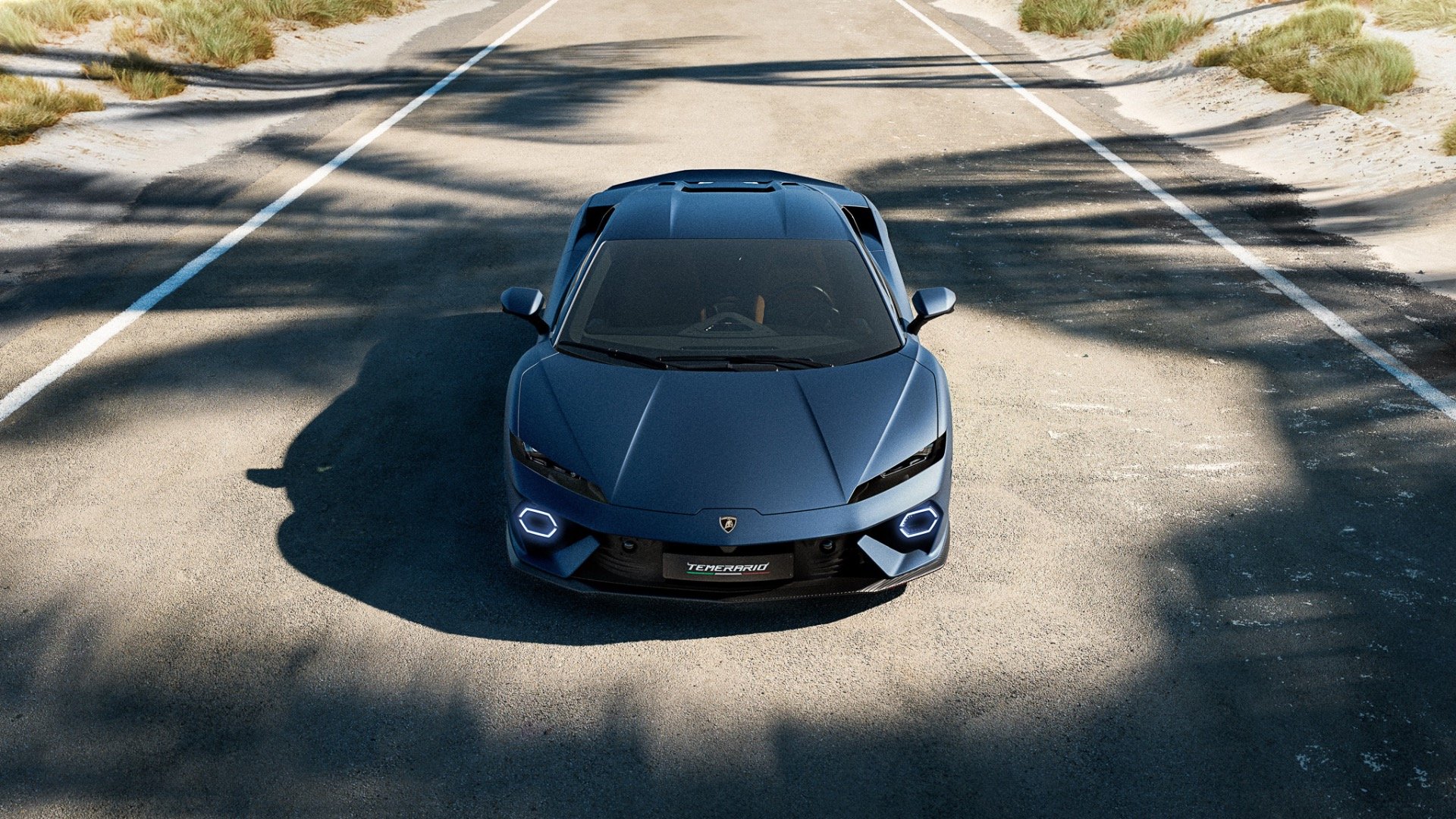
The car that turns this page is the Temerario. Its name, Italian for 'daring,' or one who acts with considered audacity, was not chosen lightly. What Lamborghini's engineers have delivered is, by almost any technical measure, the most comprehensively realised mid-engine motorcar the marque has ever produced. Whether it is also the most emotionally compelling is the more nuanced question, and the one that will define its legacy in the years ahead. That question, at least for now, remains beautifully open. What is beyond dispute is the scale of the achievement. The courage of a great house is not in doing more of what made it celebrated, it is in knowing precisely when to begin something new.
A New Engine, Conceived Without Compromise
The Temerario's powertrain begins with a 4.0-litre twin-turbocharged V8, designated internally as the L411 - designed, developed, and built from first principles in Sant'Agata Bolognese. It is the first turbocharged engine to appear in a mid-engine Lamborghini, and Lamborghini has been at considerable pains to ensure it does not feel like a concession to one. At the centre of the block sits a flat-plane crankshaft - the configuration preferred by racing engine designers for its ability to reduce reciprocating mass and enable higher rotational speeds. The outcome is a turbocharged unit that reaches 10,000 revolutions per minute; a figure with no precedent in production supercar engineering. Titanium connecting rods, Diamond Like Carbon-coated valve followers rated beyond 11,000 rpm, and twin turbochargers mounted in the hot-V position, their turbines governed by electrically controlled wastegates, complete a specification that reads more like a homologation document than a road car brief.
Peak power from the combustion engine stands at 800 CV, delivered across a plateau between 9,000 and 9,750 rpm. Torque - 730 Nm - arrives at 4,000 rpm and holds through 7,000. The character Lamborghini is pursuing is explicit: the linear, progressive rev climb previously associated only with naturally aspirated architecture, now married to the mid-range authority of forced induction. It is an engineering thesis as much as a powertrain, and the argument it makes is a compelling one. Three axial flux electric motors complete the system. One occupies the P1 position between the combustion engine and the eight-speed dual-clutch transmission, delivering 300 Nm of instant torque through every gear transition, its role not to add headline power, but to render the powertrain imperceptibly seamless. Two further units drive the front axle, contributing to a combined system output of 920 CV and enabling fully electric urban running on up to 190 CV. The 3.8 kWh lithium-ion battery, positioned within the central tunnel for optimal mass distribution, recharges fully in thirty minutes, or continuously under regenerative braking. Ten thousand revolutions per minute, from a turbocharged production engine. There is no precedent for this.
On What Has Been Relinquished and Why It Was Necessary
It would be a disservice to readers, and to the Huracán, to pass over this transition without acknowledgement. The 5.2-litre V10 that powered Lamborghini's smaller supercar for over a decade was one of the defining engines of its era: naturally aspirated, extraordinarily free-revving, and possessed of an acoustic character that no written description has ever quite done justice to. It made the Huracán feel alive in a manner that transcended the merely mechanical. The Temerario does not attempt to replicate that quality. Instead, Lamborghini has invested considerably in defining a new one. The flat-plane crankshaft generates firing orders that produce a rawer, more individual note than a conventional turbocharged unit. Body panels, engine mounts, and a dedicated acoustic symposer have been calibrated to amplify specific harmonics at specific rotational thresholds. Four distinct soundscapes correspond to the four primary driving modes. The engineering ambition behind this is genuine and rather more sophisticated than it is typically given credit for in the wider motoring press.
Whether the result reaches the same place, whether it forges the same instinctive, wordless connection between driver and machine, is a judgement that requires road time and intellectual honesty in equal measure. It is the one question that cannot be answered from a specification sheet, and we would be cautious of any writer who claimed otherwise.
The Architecture Beneath: A Spaceframe Reimagined
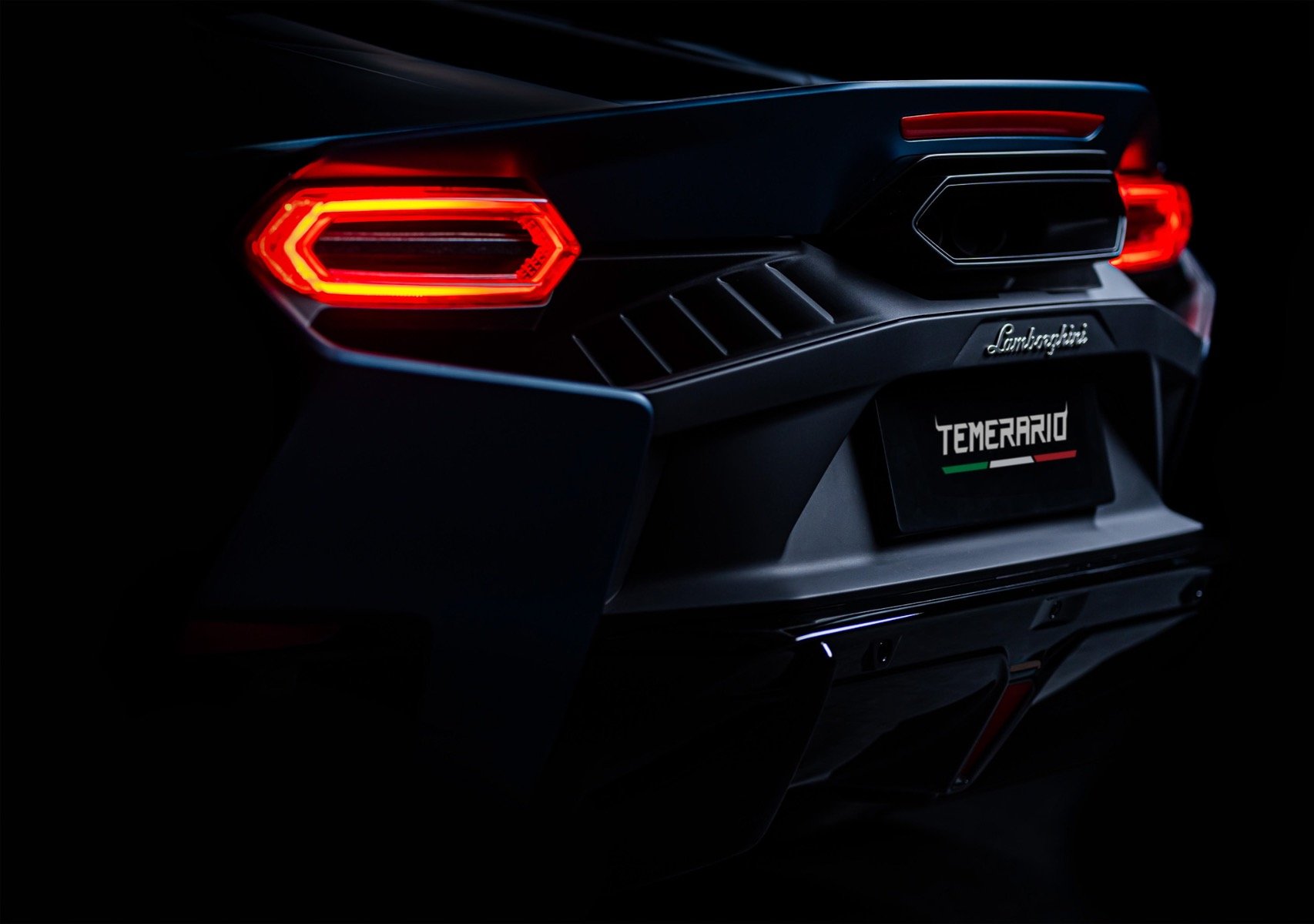
The Temerario rides on a clean-sheet aluminium spaceframe that shares no carry-over with the Huracán's architecture. A new high-strength alloy for the pressure castings, high-strength hydroformed extrusions, and hollow closed-section castings produced using internal cores have yielded a structure with torsional stiffness more than 20% greater than its predecessor, alongside over 80% less total weld length and 50% fewer powertrain components. The engineering economy here is as noteworthy as the performance gain. The consequences for those who occupy the cabin are quietly significant. Headroom increases by 34 millimetres; legroom by 46. Drivers of up to two metres in height may complete track sessions in a helmet without compromise. The front luggage compartment accommodates 112 litres - the equivalent of two cabin trolleys. These are not incidental improvements. They represent a considered recalibration of what a mid-engine supercar can reasonably ask of its owner.
Aerodynamic Sophistication as Design Language
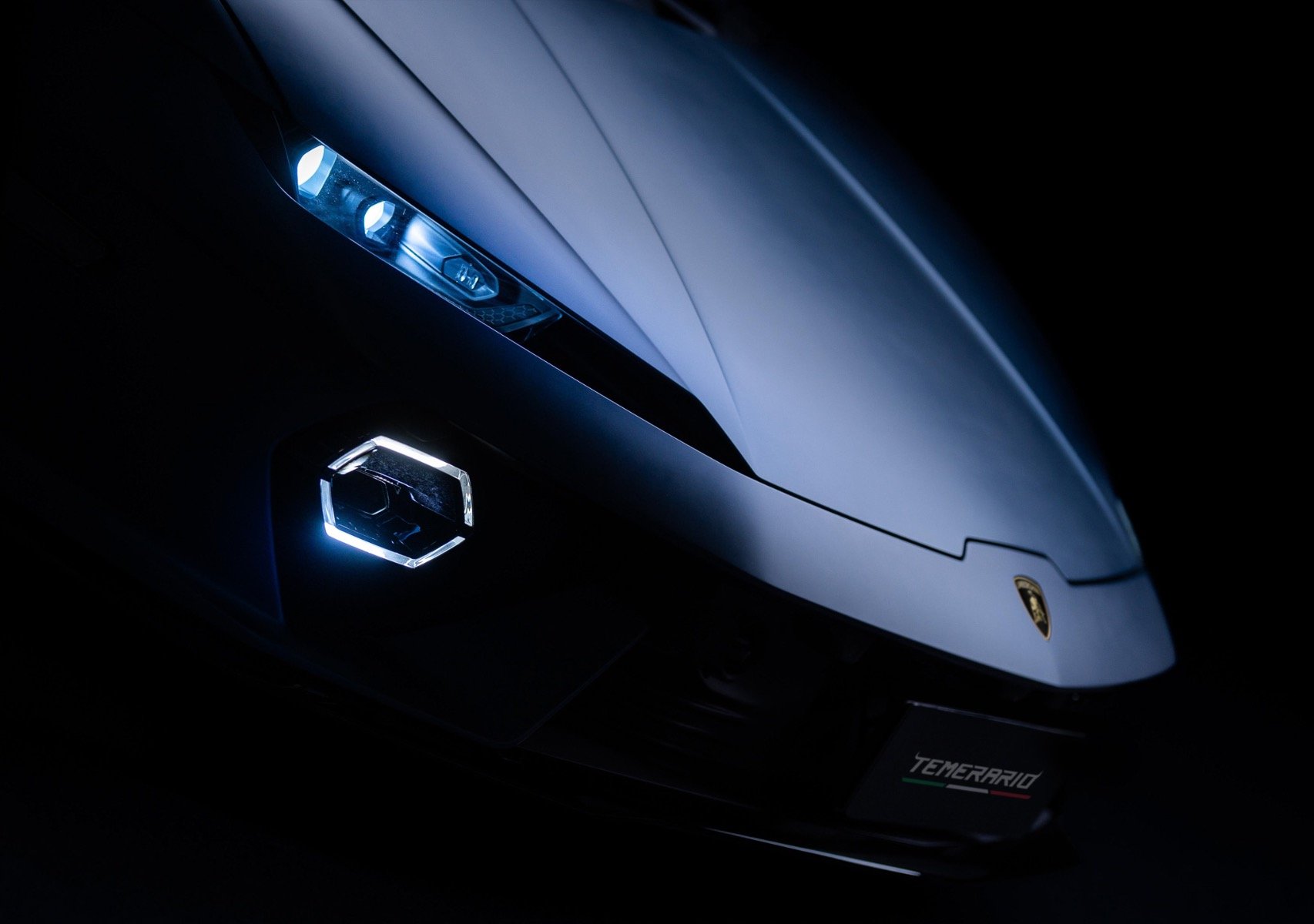
Mitja Borkert and the team at Centro Stile Lamborghini have pursued what they describe as an 'essential and iconic' aesthetic, surfaces that are pure and athletic, defined by geometric clarity rather than decorative excess. The hexagonal motif present throughout the car, from the daytime running lights to the exhaust outlets, carries the design language of the marque's heritage forward with discipline. It is, importantly, not purely symbolic: the hexagonal DRL units incorporate dedicated air tunnels and internal fins that direct cooling airflow to the side radiators. At Lamborghini, form and aerodynamic function are resolved within the same conversation. The aerodynamic data rewards scrutiny. Rear downforce in standard configuration is 103% greater than the Huracán EVO - rising to 158% with the optional Alleggerita package, which combines carbon fibre body components, polycarbonate glazing, titanium exhaust, and carbon rims for a total weight reduction of more than 25 kilograms. The underbody diffuser is 70% larger in surface area than that of its predecessor. Radiator cooling performance improves by 30%; brake caliper cooling by 50%. The car has not merely been updated aerodynamically. It has been reconceived.
Form and aerodynamic function resolved within the same conversation — this is the Temerario's defining design achievement.
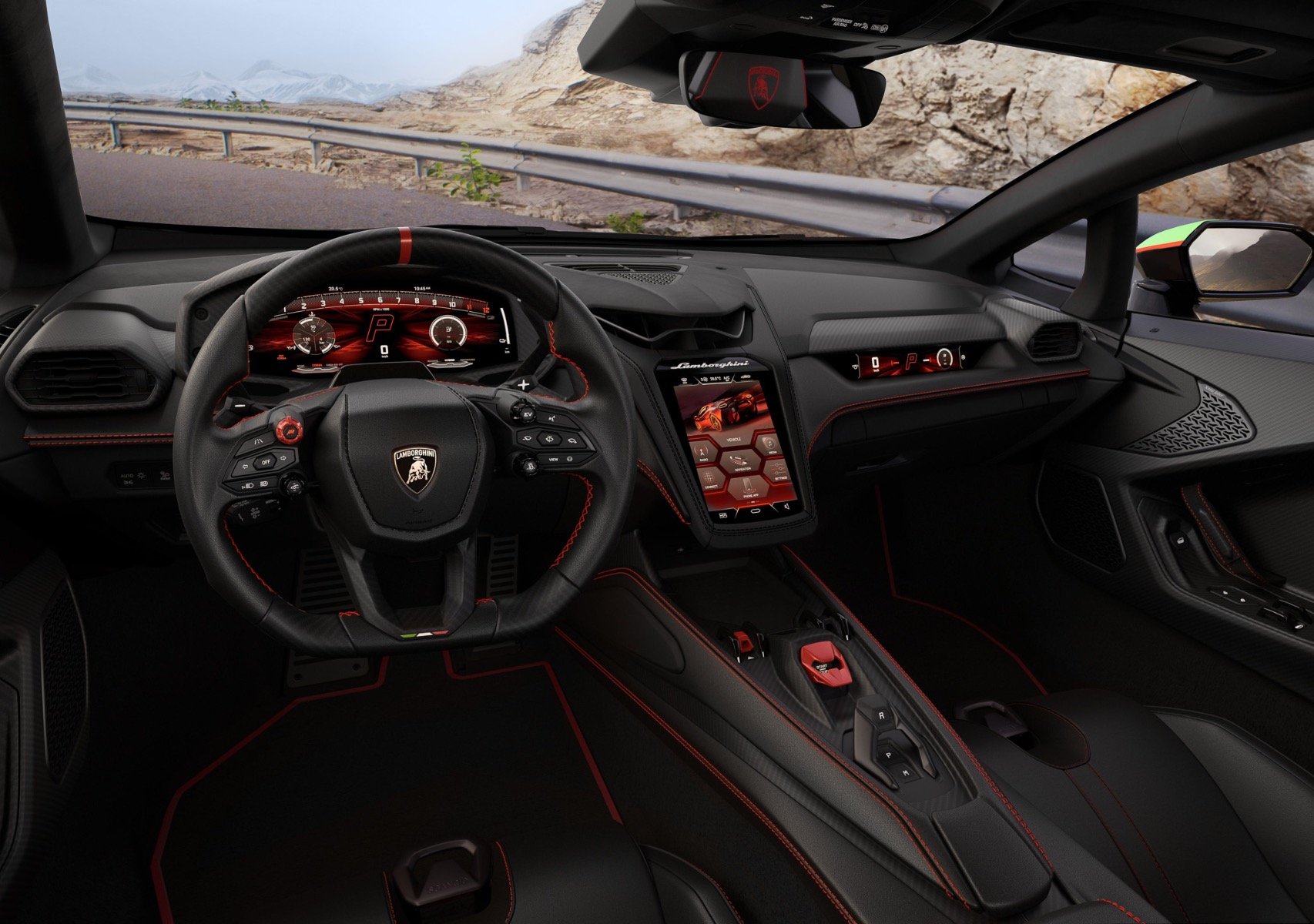
Thirteen Configurations, One Coherent Vision
Lamborghini has engineered thirteen discrete driving configurations for the Temerario, arrived at by combining five dynamic modes - Città, Strada, Sport, Corsa, and Corsa Plus with electronic stability withdrawn - with three hybrid modes governing the deployment of electrical energy. The range they describe is remarkable in its breadth. In Città, the car moves silently through its environment on electric power alone, producing no emissions, making no acoustic statement. It is, in these moments, a machine of considerable discretion - which is not a quality one has historically associated with the raging bull of Sant'Agata Bolognese, and is rather the point. At the opposite register, Corsa Plus in Performance mode places all 920 CV at the driver's disposal, with torque vectoring calibrated for maximum exploitation of the front axle. A Drift Mode, new to any Lamborghini, adjustable across three graduated intensities, completes a spectrum that asks only one thing of its driver: a clear sense of what kind of afternoon they intend to have.
The Considered Verdict
The Temerario arrives not as an act of disruption, but as an act of maturity — the work of an organisation that has looked honestly at where the motorcar is going, and chosen to lead rather than follow. It is, by any rigorous assessment, the most technically accomplished mid-engine Lamborghini yet produced: faster, more aerodynamically sophisticated, substantially more habitable, and considerably cleaner than what it succeeds, while remaining, in its proportions, its visual confidence, and its stated ambitions, unmistakably itself.
Now the open question — the one that will determine whether the Temerario enters the canon of truly great Lamborghinis or merely the record books — is whether its powertrain can establish the emotional vocabulary that the V10 possessed so naturally. That is a question for open roads and unhurried miles. It is also, frankly, the most interesting question in the supercar world right now.
Lamborghini has not abandoned what it is. It has chosen, with some deliberation, to discover what it might become. In the most storied houses, that distinction matters enormously.
Technical specifications sourced from Automobili Lamborghini official press release, August 2024. Photography and media assets available at media.lamborghini.com
T E C H N I C A L S P E C I F I C A T I O N S
Engine: 4.0-litre twin-turbocharged V8 (L411) with three axial flux electric motors
Combined Power: 920 CV / 676 kW
ICE Peak Power: 800 CV at 9,000–9,750 rpm
ICE Peak Torque: 730 Nm at 4,000–7,000 rpm
0–100 km/h: 2.7 seconds
Maximum Speed: 343 km/h
Transmission: Eight-speed dual-clutch (DCT)
Dry Weight: 1,690 kg
Braking (100–0 km/h): 32 metres
Front Luggage Volume: 112 litres
Brakes: CCB Plus carbon ceramic — 410 mm front, 390 mm rear
Tyres: Bridgestone Potenza Sport — 255/35 ZR20 (front), 325/30 ZR21 (rear)
To experience the Lamborghini Temerario, contact your nearest official dealer — Lamborghini Brussels, Lamborghini Antwerp or Lamborghini Knokke — where the team will be pleased to arrange a private presentation.
-
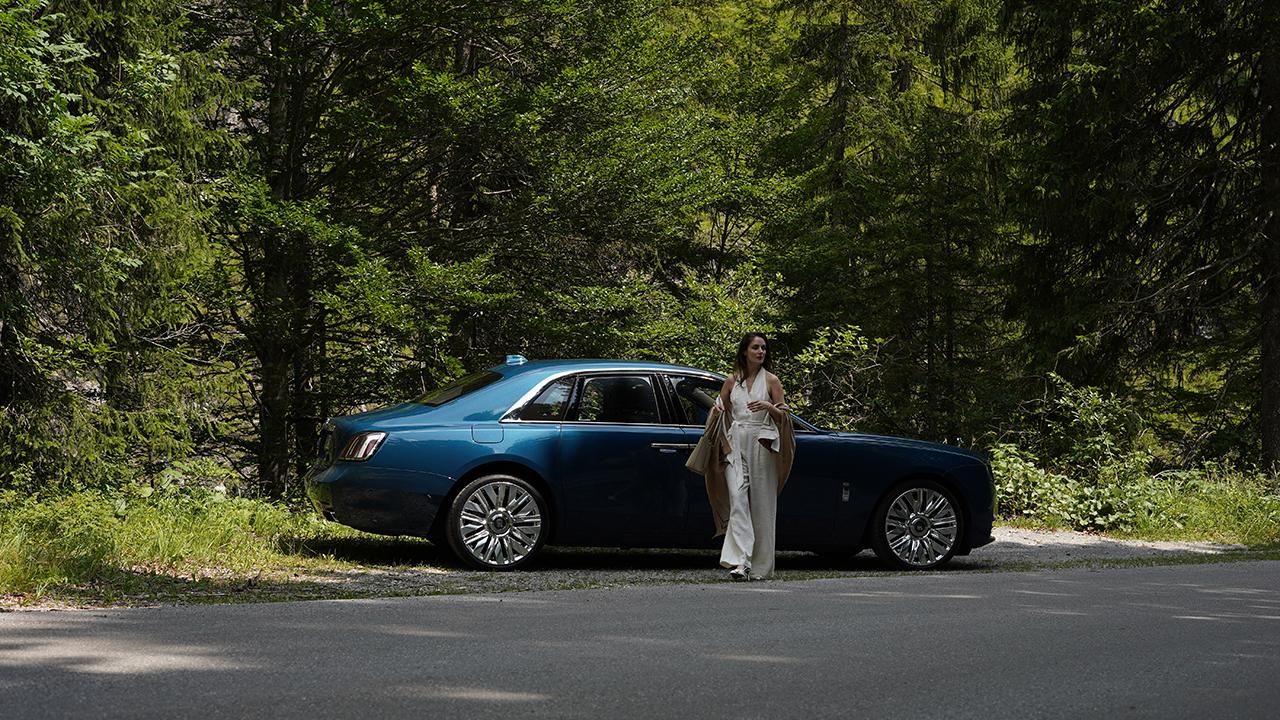
A Bavarian encounter, with a Ghost...
By Ruxandra — behind the wheel of the Rolls-Royce Ghost Series II.